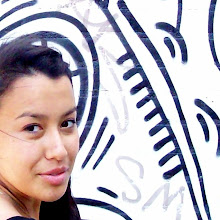
A little back-note about Rotterdam. In our hostel, everything from bathroom lights to hallway lights were motion-activated. As I walked through raised walkways that connected the upper levels, lights turning on with my every step, I felt like a purposeful member of some starship crew.
And so the epic journey to Nice. We did so much train-hopping it was more like permanent floating. When I ordered some food during a change in Lille, for the first time in weeks I was able to do it in a different language, using more than nouns and numbers and pointing. I could conjugate verbs again!
When we finally made it to Paris we had no problem acquiring the tickets to Nice that had been so elusive in the Netherlands, and we found ourselves with eight hours to adventure. We dropped off our bags in storage; I changed to ‘look more French,’ and we set out to hit as many major sights as possible. Since the city was so overrun with people we opted for the ‘look, there’s that, take a picture’ approach, rather than spending hours in line to go inside one or two sights. Our first pause was Notre-Dame, and Brendan began to understand the scale of things in store. We walked along the interminable exterior of the Louvre and continued through the Tuilleries gardens. It was a hot and dusty day, and soon my black shoes were the color of the sandy paths. We stopped for some overpriced but quenching soft-serve near the obelisk, and again I missed gelato (how much more do I miss it now!). We could see the Arc de Triomf in the distance, but it is so huge that it would be our donkey’s taunting carrot for quite a while. I stopped for a ham and cheese crepe from a street vendor. When in France… . Eons later, after stopping in a store or two on the Champs-Elysees and watching an impressive street performer, we made it to the Arc. There I saw ‘Miranda,’ the last name of a distant relative, engraved on one of its faces. There seemed to be some kind of military remembrance or celebration underway, and as old men marched towards us, we marched on toward the rest of Paris. Our next intended destination was the Eiffel Tower, but we inadvertently spent the next hour making a large circle around the Arc, before we looked at a map and figured it out. You’d think a landmark that huge shouldn’t be hard to find. Eventually we made it, and took pictures and composed postcards. We saw the dome of Invalides in the distance, and it came time to start heading back. We stopped into a mini-mart to get some snacks for the ride, and I got to use my French to ask where the nearest Metro entrance was. Success! We took the eight to République, to take the five to our station, Gare Austerlitz. Easy. Too easy. We hopped on the five and started moving just as I realized we were going the wrong way. Oops. The rest was uneventful, and we joined our unexpected Texan companions in our sleep cabin on the train.
I woke up around 730 and was itching to see the famous South of France countryside, but with the shade down and everyone fast asleep, I would have to look elsewhere. I went outside to the corridor and marveled. It felt like the first time the train window showed me something truly unique and unfamiliar. The brush was different, and at times I felt like I was in a painting. The light was soft and diffused, and in the distance there were rolling green mountains. Once our companions woke up I raised the blind in our cabin, and light flooded in. Picturesque red-tile roofed buildings zipped by, and palm trees waved a frondy hello. Suddenly the ocean appeared. It was almost like being back in Cinque Terre. Already I knew that Nice would be the place for me. Already I wished I had more time to spend exploring this region.
17 July 2010

08 July 2010
Nether say Nether
This morning Matt and Brendan and I woke early. Ellie is going to Hungary, Matt to Nirenberg and then Munich, and Brendan and I to Amsterdam. We barely made our train, but we did it. As usual, the morning was gray, and the blades of windmills spun in and out of oblivion. Much later the sun came out, and I found myself in the Texasiest landscape yet. Fields upon fields, no mountains, and lots of phone wires. A strange propensity of reclining cows, a flock of sheep, horses, ponies, and baby ponies. I spot storks flying over the fields, a bird feeding its young'n, a gas station named 'Brand Oil,' and house roofs dressed in shiny blue solar panels. It's been five hours and we're still in Germany.The thing that struck me upon arriving in Amsterdam was how un-foreign it all seemed. Signage was in English; people spoke English, and Dutch looks like English. I felt more like I was in New England than in Europe. The day we arrived was uneventful, and consisted of finding food, doing some wandering on foot, and making plans for the rest of our journeys. The following day we went to the Van Gogh Museum, where I discovered just how prolific Van Gogh had been. I enjoyed being able to see the progression of his style and several notable (aka textbook famous) pieces. Afterward we caught a walking tour and tried to do some more wandering. The following morning we intended to go to the Anne Frank House, but due to train complications we ended up leaving early and going to Rotterdam.
Though we arrived in Rotterdam at noon and had to leave early the next morning, with the help of a 10pm sunset we were able to see enough of the city to fall in love. First of all, our hostel was inside the famous Cube Houses, which were literally across the street from the train station. Convenient much? Thanks to Brendan's sleuthing, instead of just walking past a landmark, we got to reside in it for a night. We dropped off our bags and picked up a map and embarked on adventure. From the very beginning I was overwhelmed by the awesome architecture. The city was so damaged in WWII that it had to be almost entirely rebuilt, so it is very modern; very different from most of the Europe we had seen so far. In addition to the buildings, the city just had a great artistic vibe. Every corner had sculptures or street art. It felt like a living museum.


Unfortunately, the Netherlands Architecture Institute was closed for renovations (inescapable, I told you), but we got to see the Museumhouse Sonneveld, a completely restored mansion that was built in the Nieuwe Bowen style in 1933. It was funny how something that was once so obviously progressive and ahead of its time could now be considered almost Ikea-style. Still, it was a beautiful and innovative house with a particularly breathtaking stairwell. We meandered Rotterdam, approximating the path of the self-guided walking tour on our map, and found a steel skatepark, a sculpture garden, the 'ethnic neighborhood,' a shopping district, and downtown. Dinner just added to the brightness of my memories of Rotterdam. Given vague restaurant recommendations by the glittery concierge at the hostel, we chose to heed his sagest but vaguest words: go where the locals go. We ended up at a Surinamese/Javanese/Indian restaurant, where even the 'English' menu couldn't quite help us, but where it was almost standing room only and trafficked by even more people getting food to-go. This tiny room overflowed into the street with hungry patrons, and those of us waiting circled like vultures looking for enough open seats for our respective parties. I still don't know exactly what I ate, but it was delicious and made me wish I could find food like this in the States. Chicken soup laced with white rice, soy sprouts, and other delicious things, which mingled around a hard-boiled egg. The bowl was not much bigger than my two cupped hands, but suddenly my having ordered an additional entree seemed overzealous. I was full. To-go, please.

It was still broad daylight at 8pm, and we dropped off our food and did even more wandering, this time towards a red bridge that had caught my fancy. To be honest, everything caught my fancy. Berlin might have been the most anticipated destination, but Rotterdam, which I did not even intend to visit, was high up there on the favorites list.

The next morning began our famous trans-France trek, as described in the earlier post, Disney Ride.
28 June 2010
Victory under construction
I wrote so many postcards and so many emails and so many journal entries about Berlin, I feel like I must have written this post already. I loved Berlin. Enough to extend my stay, and domino-effect everyone else into doing the same. Here's the story of my favorite non-Italian European city.
First things first. (Even though this is almost last.) Europe is all about preserving history. Lucky for us. Unluckily for us tourists, that means that it is a fact of life that it is absolutely impossible to go somewhere without some big important famous sight coyly getting re-dressed behind some scaffolding. In Berlin, that was the Victory Column. Here's what postcards and the internet purport exists:
 Here's what I saw:
 No matter where you go, you will find this to be true. Sometimes, if you're lucky, the scaffolding will be covered with a printed image of what you're supposed to be seeing, and from pictures and far away it almost looks like the real thing. Sometimes, somebody decides that it is a great place for a giant advertisement, and the front of a church or the sides of a bridge are bedecked with the chiseled features of Calvin Klein models. Still other times, the cover is a solid color, or an architectural drawing of what lies beneath, and in the midst of all the imposing importance around it, the building becomes almost invisible.
Back to Berlin. Day One marks the arrival of Brendan and little else. Day Two was the epitome of dreary: wet, cold, drizzling, and we weren't quite prepared for it or its unmotivating effects. We walked to the Brandenburg Gate and had some cheesy pretzels from a street vendor. We sought an indoor activity and opted for viewing the city from above from within the glass dome on top of the Reichstag, the parliamentary building. The only flaw in this plan was that to get to the top we first had to stand in line outside for about an hour, and we were a numb, glum, drippy quartet when we finally made it to the portico. Still, the thought that aside from a security checkpoint this was completely free and open to the public made me keep loving Berlin. The Reichstag, over 100 years old, with its dome of not even 20 years, exemplified what I would find to be the character of Berlin. A fusion of past and present, historic and modern, memories and dreams. Inside the dome, one walkway spiraled up while another spiraled down, forming a traffic-preventing double helix. The free audio tour read stripes of paint on the path to sense your location and tell you about what you could see from where you were. The joys of German efficiency. I may love the rusty crusty, but a lesser known fact until now is that I also have a passion for clean lines, structure, and glass. Berlin, full of both, was true love.


Day Three started out with adventure. Matt lured me into his vague plan with promises of 'the most moving statue his brother had ever seen,' and I was curious enough to find out what could make a statue moving (and just generally wanted to see as much of Berlin as possible), so I woke up early and joined in the adventure. We arrived at Treptower Park, one of the many beautiful green areas in the city, and began our quest for this elusive statue. Instead, we ran into people setting up some kind of fairground. We consulted a vague map before inquiring with a solitary man who seemed strangely happy to help. He gave us complicated German directions with lots of lefts and rights and forks and more rights and lefts, all the while seeming like he was leading us to his den of robbers. Regardless, we made it. As is typical in Europe, we first saw a clearing with a small statue, but as we approached and turned a bend, the world opened up to reveal what was in store for us. I firmly believe that Europe loves the grand reveal, complete with mental fanfare.


First things first. (Even though this is almost last.) Europe is all about preserving history. Lucky for us. Unluckily for us tourists, that means that it is a fact of life that it is absolutely impossible to go somewhere without some big important famous sight coyly getting re-dressed behind some scaffolding. In Berlin, that was the Victory Column. Here's what postcards and the internet purport exists:


Back to Berlin. Day One marks the arrival of Brendan and little else. Day Two was the epitome of dreary: wet, cold, drizzling, and we weren't quite prepared for it or its unmotivating effects. We walked to the Brandenburg Gate and had some cheesy pretzels from a street vendor. We sought an indoor activity and opted for viewing the city from above from within the glass dome on top of the Reichstag, the parliamentary building. The only flaw in this plan was that to get to the top we first had to stand in line outside for about an hour, and we were a numb, glum, drippy quartet when we finally made it to the portico. Still, the thought that aside from a security checkpoint this was completely free and open to the public made me keep loving Berlin. The Reichstag, over 100 years old, with its dome of not even 20 years, exemplified what I would find to be the character of Berlin. A fusion of past and present, historic and modern, memories and dreams. Inside the dome, one walkway spiraled up while another spiraled down, forming a traffic-preventing double helix. The free audio tour read stripes of paint on the path to sense your location and tell you about what you could see from where you were. The joys of German efficiency. I may love the rusty crusty, but a lesser known fact until now is that I also have a passion for clean lines, structure, and glass. Berlin, full of both, was true love.


Day Three started out with adventure. Matt lured me into his vague plan with promises of 'the most moving statue his brother had ever seen,' and I was curious enough to find out what could make a statue moving (and just generally wanted to see as much of Berlin as possible), so I woke up early and joined in the adventure. We arrived at Treptower Park, one of the many beautiful green areas in the city, and began our quest for this elusive statue. Instead, we ran into people setting up some kind of fairground. We consulted a vague map before inquiring with a solitary man who seemed strangely happy to help. He gave us complicated German directions with lots of lefts and rights and forks and more rights and lefts, all the while seeming like he was leading us to his den of robbers. Regardless, we made it. As is typical in Europe, we first saw a clearing with a small statue, but as we approached and turned a bend, the world opened up to reveal what was in store for us. I firmly believe that Europe loves the grand reveal, complete with mental fanfare.


The rest of the day consisted of a tour full of sights and the details necessary to appreciate them.
Day Four was the art day of the trip. We all went to the Guggenheim, and though I think I was the only one who really enjoyed it, I think I liked the exhibit of Wangechi' Mutu's work enough to make up for the rest of the group. I waxed on about it in my journal. For once, what really made it for me was the artist's statement, which, combined with her work, yielded much thinking on my part concerning the relationship between an artist's intended message and a viewer's interpretation, and whether one is more correct than another. Other sights for the day included the only Catholic church in Berlin, a chocolate store where you can get custom-made chocolate, the Tiergarten, and allegedly the Victory Column. From here Matt and I pushed further while the other two stayed behind, and after much navigational miscalculation we arrived at the Kaiser Wilhelm Memorial Church. Once a grand church at the center of the intersection of several thoroughfares, this church was heavily bombed during the war. Instead of fully restoring it, however, the remains of the church were made structurally sound, and a modern chapel and campanile were constructed on either side of it. Now, with its gaping wounds and jagged spire, it is a blatant reminder that the past cannot be allowed to stay in the past. I wondered what it would be like to drive past it every day on the way to work. Surrounded by strip malls and fast food places, I wondered whether locals saw it as an open wound, as I did, or whether the construction around it indicated that it had been allowed to scar.


Day 5 was mostly conclusions and preparations. Matt and I journeyed to the East Side Gallery, the longest remaining section of the Wall (over 1km), covered in paintings. We met up with Brendan and I finally had the famous Black Forest cake, as instructed. In the evening we all reconvened for currywurst and bratwurst from the best locale for it in Berlin, a pre-dinner before our real dinner, which ended up being at a 'Mexican' restaurant. This would be our final meal as a group of four, and we made it last. On the way home we found a photobooth, and crammed in to make some final memories. Though we weren't quite enough to make the tiny booth overflow with people, there was laughter enough to fill the whole street.
24 June 2010


Today's Date
Despite the lingering thread pointing to Germany at the end of my last post, it is not yet time for Germany; it is time for our last day in the Czech Republic. One thing that was notably absent from my recounting of Prague, but previously mentioned, was the cultural prevalence of beer. What better, then, than to visit Plzeň, where Pilsner Urquell is brewed, and czech it out for myself? 'Urquell' literally means 'original source,' and according to the tour guide as well as Wikipedia, 'most popular lagers produced in the rest of the world are based upon this original beer.' But, this is getting ahead of things.
After a two-hour early morning train ride, Matt and I arrived in Plzeň and were instantly greeted by the wafting scent of the famous brew. This fragrance would wend its way around the city, disappearing just so it could reappear and remind us of its presence. Though our main objective was the brewery, the tour was three hours after our arrival, and the town was ours for the exploring. I guess I shouldn't call it a town; its population exceeds 100,000. Still, because we mostly saw the Old Town Square and surrounding areas, despite the city's vast industrial expanse, it felt like a town.
As usual, a Gothic church loomed over the otherwise open square, today peppered by vendors and pony rides and cotton candy and popcorn. Brightly colored buildings, at once quaint and ornate, bordered the square. It just felt so quintessential. Andean performers created an out of place soundtrack to the experience. We entered the church and discovered that we could go up the tower, the tallest in Bohemia at 102 meters. At the top, I marveled. I looked out over the expanse of Plzeň, buffeted by the wind, and breathed, and sat, and breathed. The Andean music tinkled up from below and somehow it almost fit now.
After visiting the Great Synagogue we returned for the tour. The brewery produces Pilsner, Kozel (a dark beer), Gambrinus, and Rategast (a non-Alcoholic beer), but it is now part of the SAB Miller conglomerate, which is also responsible for delicacies like Steel Reserve, Keystone, and Miller High Life. During the tour we rode in the largest elevator in the country, which fits approximately 75 people and was probably bigger than my dorm room. We tasted barley, malt, and hops. Later, even more excitingly, we tasted unfiltered, unpasteurized Pilsner straight from a giant fermentation barrel. After the tour, led by Ignacious, on his first day and in his lucky shoes, we returned to the square. We visited the City Hall and found a moving memorial to WWII soldiers. Plzeň was liberated by troops led by Patton, and the city has always had very pro-America sentiments. There is actually a monument to Patton somewhere in the city. Here, however, we found photos of mostly American soldiers, how they looked then and now, alongside their written memories of their tour of Plzeň.
By the time we headed back to Prague for the night, hunger had set in, and I gave in to Chinese takeout for the train ride back. It was the first Chinese food I had had since leaving the US, and one of only a handful of occasions when I had eaten 'foreign' food while in Europe. Matt and I snuck up on Ellie on our way back to the hostel and, reunited, the three of us went for dinner/snack at the restaurant we visited on our first day in Prague. Farewell, Czech, soon, finally, hello Germany.
23 June 2010
Prague Potpourri
I untie the crackled gold cover of the leather travel journal I bought in Florence, and I think about how much memory and detail time erases. Europe seems ages ago. But then, I will hear the name of a place that used to be foreign, and a mental double take will remind me that it has become familiar. I have been there, once long ago. Little things keep surprising me. Being able to type an @ without a scavenger hunt on the keyboard, toilet paper that is square again, hearing strangers speaking Spanish; I guess these things mean home.
Things my journal says I loved about the Czech Republic:
The guidebook asserted that once you get a taste of the local cuisine, you will wonder why and how you've never had it. It is delicious. For people who love meat and potatoes sneakily dressed in shockingly rich and intricate flavors. For people who aren't afraid to literally take a stab at a pork knee or neck. The only thing I disliked was a street-vendor prepackaged sandwich I bought against my better judgment, based on a photo that bore no resemblance to the product I received. I had to disassemble it and eat the exterior of the bread and napkin off the chicken inside, which was covered in gobs of some sauce so vividly orange it could probably be used as a homing beacon.
While most of the places we had visited in Europe thus far felt old, Prague felt like a timeline. Or, perhaps more accurately, a time knot. Over five hundred years worth of architectural movements cozily intermingle, leaving one to wonder whether the streets of Prague started out like a gap-toothed baby's gums, with buildings popping up over time to fill in empty spaces. Adjacent architecture ranges from Medieval to Gothic to Art Deco to Art Nouveau to Cubist (the only city with Cubist architecture) to Soviet to Modern to Contemporary. The Municipal House, a resplendent example of Art Nouveau built in 1911, is right next to the Powder Gate, which leads into Old Town, was built in 1475, and across the street from these two structures is a building built in the Soviet era.
My favorite place in all of Prague -- as I say this so many other candidates come to mind; perhaps the calling it the most serene place I experienced would be more accurate -- was Vyšehrad. We took a short, steep, green and wooded walk (with bits of rust) up to and through the walls of this hilltop fortress above the Vltava River. I could have spent all day overlooking the city, far from the hustle and bustle and rustle of life and tourists, but after a picnic brunch we kept exploring. Through ancient gates and a cemetery of the average and famous together in death, we arrived at the Basilica of Saints Peter and Paul. What a surprise. Inside the imposing time-blackened Neo-Gothic church, the walls were covered in Art Nouveau depictions of saints. Before I lapse into rhapsodic art history mumbo jumbo I will move on, but know that for me it was art history magic.
We all took some time apart one afternoon to tend to our diverse interests, and I went to the only museum I saw in the Czech Republic: the Alfons Mucha Museum. I have always loved his art, and here in what at first seemed like a distressingly small (but ended up being a deceptively deep) space, I found much to keep loving. Original drawings, unfinished drafts pulled from the lithography stone, photographs taken in his studio, a childhood painting, medals, even a New York Times article about his visit to the United States. In fact, because the museum was not so so large, I was able to savor everything, read every description, and feel neither rushed nor overwhelmed.
Despite the fact that Prague was fascinating, it left me a little unsatisfied. Looking back there was much to admire and appreciate and much to see that I didn't have time for, those things you add to the 'Next time in Europe' list. I'm not sure what was lacking, or whether anything really was lacking at all. Maybe it was the promise of Berlin just around the corner, the destination I had chosen; the one place I had been itching to get to all along.
Things my journal says I loved about the Czech Republic:
Despite being mostly incapable of remembering anything other than the words, 'Speak English?, beer, and please,' I love that I understand the pronunciation. One of the things I found overwhelming in Vienna was being surrounded by so much textual information but being unequipped to pronounce it, much less read it. Here, I might have no idea what I'm saying, but I'm probably saying it right enough.
I loved finally having an exchange rate in my favor, with the Kc being about 20 to the dollar.
I experienced what I think was my first and only thunderstorm in Europe on our way to dinner the first night.
The guidebook asserted that once you get a taste of the local cuisine, you will wonder why and how you've never had it. It is delicious. For people who love meat and potatoes sneakily dressed in shockingly rich and intricate flavors. For people who aren't afraid to literally take a stab at a pork knee or neck. The only thing I disliked was a street-vendor prepackaged sandwich I bought against my better judgment, based on a photo that bore no resemblance to the product I received. I had to disassemble it and eat the exterior of the bread and napkin off the chicken inside, which was covered in gobs of some sauce so vividly orange it could probably be used as a homing beacon.
While most of the places we had visited in Europe thus far felt old, Prague felt like a timeline. Or, perhaps more accurately, a time knot. Over five hundred years worth of architectural movements cozily intermingle, leaving one to wonder whether the streets of Prague started out like a gap-toothed baby's gums, with buildings popping up over time to fill in empty spaces. Adjacent architecture ranges from Medieval to Gothic to Art Deco to Art Nouveau to Cubist (the only city with Cubist architecture) to Soviet to Modern to Contemporary. The Municipal House, a resplendent example of Art Nouveau built in 1911, is right next to the Powder Gate, which leads into Old Town, was built in 1475, and across the street from these two structures is a building built in the Soviet era.
My favorite place in all of Prague -- as I say this so many other candidates come to mind; perhaps the calling it the most serene place I experienced would be more accurate -- was Vyšehrad. We took a short, steep, green and wooded walk (with bits of rust) up to and through the walls of this hilltop fortress above the Vltava River. I could have spent all day overlooking the city, far from the hustle and bustle and rustle of life and tourists, but after a picnic brunch we kept exploring. Through ancient gates and a cemetery of the average and famous together in death, we arrived at the Basilica of Saints Peter and Paul. What a surprise. Inside the imposing time-blackened Neo-Gothic church, the walls were covered in Art Nouveau depictions of saints. Before I lapse into rhapsodic art history mumbo jumbo I will move on, but know that for me it was art history magic.
We all took some time apart one afternoon to tend to our diverse interests, and I went to the only museum I saw in the Czech Republic: the Alfons Mucha Museum. I have always loved his art, and here in what at first seemed like a distressingly small (but ended up being a deceptively deep) space, I found much to keep loving. Original drawings, unfinished drafts pulled from the lithography stone, photographs taken in his studio, a childhood painting, medals, even a New York Times article about his visit to the United States. In fact, because the museum was not so so large, I was able to savor everything, read every description, and feel neither rushed nor overwhelmed.
Despite the fact that Prague was fascinating, it left me a little unsatisfied. Looking back there was much to admire and appreciate and much to see that I didn't have time for, those things you add to the 'Next time in Europe' list. I'm not sure what was lacking, or whether anything really was lacking at all. Maybe it was the promise of Berlin just around the corner, the destination I had chosen; the one place I had been itching to get to all along.
16 June 2010
The first and last look
Train stations:
the land of hellogoodbye
the land of transit
the land of transitions
Prague

Plzeň
 Berlin

Rotterdam
 Paris
 Nice
 Milan

Milan really was the last last look.
the land of hellogoodbye
the land of transit
the land of transitions
Prague

Plzeň


Rotterdam


Milan really was the last last look.
Subscribe to:
Posts (Atom)